Emergency Siding Repair: What to Do Before Help Arrives
When Your Siding Fails: The Emergency Moment
A wild storm just rolled through. You step outside. Siding is scattered in the yard. Gaps yawn on the walls where your home was once sealed tight. Your heart pounds—what now?
Emergencies like this don't wait for business hours. At Schaefer Exteriors, we've helped countless homeowners navigate that first critical hour. Fast action and calm thinking can make all the difference.
Safety First: Protect People and Property 🛑
Before anything else, pause. Scan for dangers.
- Stay clear of downed power lines. Electricity and water don’t mix.
- Avoid sharp debris and exposed nails. Wear shoes, gloves if you can.
- If you smell gas or see major structural damage, leave the home and call 911.
- Keep pets and children inside.
Remember, your safety is always more important than siding.
Is It Really an Emergency?
Some damage is urgent. Other issues can wait.
Emergency signs:
- Large sections of siding missing, letting in water or wind.
- Holes big enough for pests or weather to enter.
- Loose panels flapping dangerously.
- Siding damage after a fire, flood, or major storm.
If you’re unsure, it’s better to err on the side of caution. Emergency Siding Services are designed for just these moments.
Quick Actions: Temporary Protection
Think of your home like a raincoat with a rip—until it’s sewn up, you need a patch.
What can you do right now?
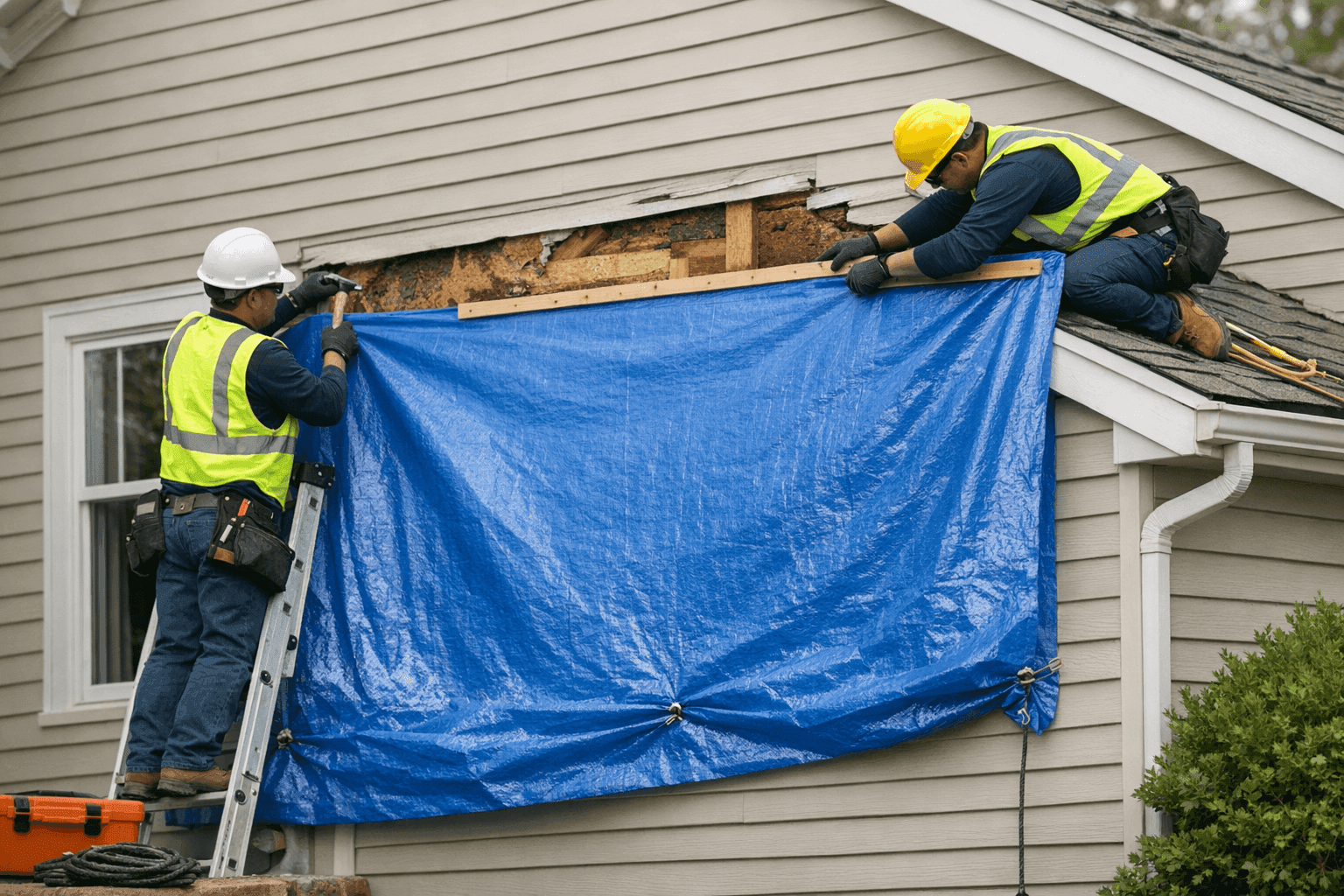
- Cover exposed areas with a heavy-duty tarp or thick plastic sheeting. Secure with duct tape or boards, but don’t risk your safety on ladders during high winds.
- For small holes, even trash bags or plastic drop cloths will buy you time.
- If you have removable boards or plywood, use them to brace broken panels.
Don’t try to reinstall large pieces yourself. That’s a job for professionals.
What to Avoid: Common Mistakes
- Don’t use nails or screws on electrical lines or near windows.
- Don’t climb on wet or icy surfaces.
- Never ignore water leaks. Small drips can lead to big mold problems.
- Don’t wait to document—take photos before you move anything.
Some “quick fixes” can make things worse. When in doubt, keep it simple and safe.
Document Everything for Insurance
Grab your phone. Snap clear, wide shots of the damage, then close-ups. Note the date and time. Photograph any water getting inside.
Also:
- Save receipts for anything you buy to protect your home (like tarps or boards).
- Write down what happened, weather conditions, and times.
Insurers often want proof that you acted to prevent further damage. The more detail, the better.
What the Pros Do on Arrival
When Schaefer Exteriors arrives, we bring trained eyes and the right tools.
Our team will:
- Inspect the area for hidden issues—like moisture behind panels or structural shifts.
- Prioritize repairs that prevent water and pest entry.
- Use industry-standard materials for patches, not just quick covers.
- Advise you on next steps and help coordinate with your insurance adjuster.
We work by the book—following International Residential Code (IRC) and local building guidelines.
DIY or Call a Siding Pro?
If you’re handy, basic patching is safe for minor gaps. For larger damage, or if you’re unsure, call a siding company with Emergency Siding Services near you.
Call a pro if:
- You see signs of rot, sagging walls, or buckled siding.
- The area is hard to reach.
- It’s storming, dark, or icy outside.
Better a brief wait than a bad fall.
How Pros Prioritize: The Siding Triage
Imagine a doctor in an ER—some cases need care right now, others can wait. Siding contractors do the same:
- Stop water intrusion first.
- Secure loose panels to prevent more damage.
- Identify safety hazards (exposed wires, sharp edges).
- Document everything for restoration and insurance.
This methodical approach is what protects your home for the long haul.
Insurance Basics: What You Need to Know
Most homeowners’ insurance covers sudden storm damage, but policies vary. Here’s what usually helps:
- Document the damage and your quick actions.
- Contact your insurer ASAP.
- Don’t discard damaged materials until an adjuster sees them.
- Ask what’s covered—materials, labor, temporary repairs.
If you need help talking to your insurer, Schaefer Exteriors can coordinate with them as repairs begin.
Timeline: What to Expect
Emergency repairs often happen in two stages:
- Temporary patch: Within hours to a day, stopping leaks and sealing holes.
- Permanent fix: After assessment, matching siding type and color, scheduling labor. This can take a few days to a few weeks, depending on material availability.
We’ll keep you informed at every step.
Costs: Honest Answers
Costs for emergency siding repair depend on:
- Size and extent of damage.
- Siding material (vinyl, fiber cement, metal, wood, stucco, etc.).
- Accessibility—second stories or hazardous locations require extra care.
- Need for additional services (insulation, gutter repair, trim replacement).
We always provide clear, upfront estimates before work begins.
What Siding Materials Mean for Emergency Repairs
Not all siding reacts the same way to storms.
- Vinyl siding can crack or blow off in panels. Usually quick to patch.
- Wood siding may splinter or rot if left exposed. Needs fast sealing.
- Fiber cement and stucco are resilient but can chip or break.
- Metal siding may dent but rarely lets water in unless seams are broken.
During a Siding Color Consultation near you, we can help you choose materials that balance curb appeal and durability.
Prevention: The Best Emergency Plan
You can’t stop storms, but you can stack the odds in your favor.
- Schedule regular siding inspection and maintenance.
- Keep trees trimmed back from your home.
- Clean gutters and downspouts to prevent backup and water intrusion.
- Re-caulk joints and check for loose panels every season.
A little prevention can save a lot of headaches (and expense).
FAQ: Quick Answers to Common Emergency Siding Questions
How fast should I act after storm damage?
Immediately—water intrusion can cause damage within hours.
Can I match my old siding color and style?
Usually, yes. We source a wide range of materials and offer Siding Color Consultation near you.
Will insurance cover it?
Most policies cover sudden, accidental damage. Check your policy or ask your agent.
Can I stay in my home during repairs?
Almost always. Major repairs may require temporary relocation only if there’s structural risk.
Avoiding the Most Common Mistakes
- Ignoring small damage: Tiny leaks become big headaches.
- Using the wrong materials: Not all plastics or tapes are weather-resistant.
- Skipping documentation: Take photos, save receipts, write down details.
- Delaying the call: The faster you get a pro on site, the less risk for costly repairs later.
Seasonal Considerations: Storms, Wind, and Ice
Spring and fall storms bring wind and rain. Winter brings ice dams and freeze-thaw cycles. Each season has its own hazards.
- Inspect siding after severe weather.
- Look for warped panels, loose trim, or water stains.
- Schedule routine Siding Maintenance before storm season.
Siding Emergencies in Yakima and Beyond
Whether you’re dealing with a sudden repair or planning ahead, Schaefer Exteriors is ready to help. Our crews have seen it all, from wind-torn panels to hail-pocked trim. If you’re looking for reliable siding help, our team is just a call away.
The Calm After the Storm
Emergencies shake us up. But with a few smart steps—protecting your space, documenting the damage, and calling the right team—you’ll weather the storm with confidence.
If you’re facing urgent siding trouble, don’t wait.
Call Schaefer Exteriors now — or reach us anytime at 877-331-5875 .