Commercial vs. Residential Siding: Key Differences Explained
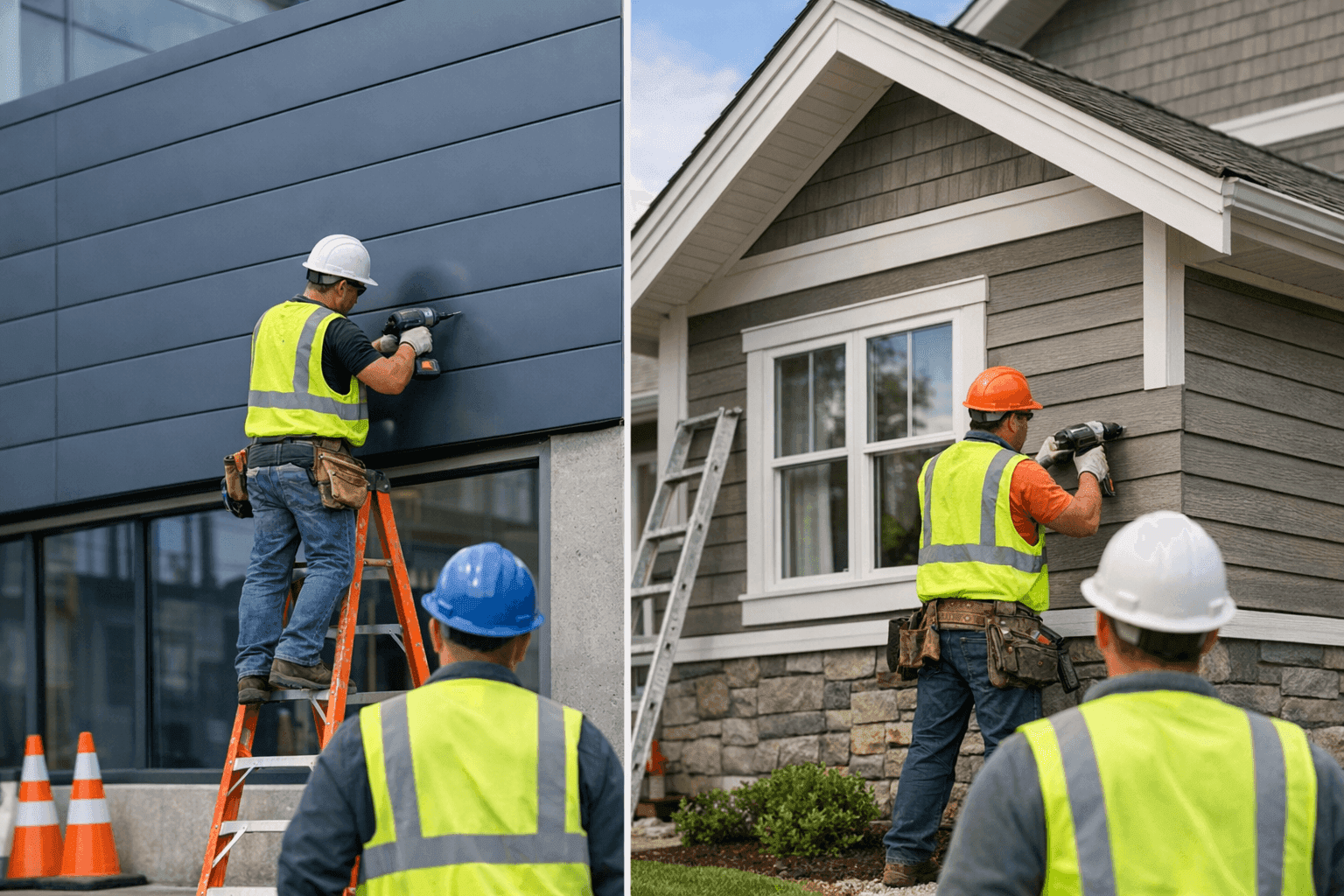
Your building’s siding isn’t just decoration. It’s your shield against the elements, your first impression, and—sometimes—your biggest headache. But did you know that siding for a local business is a different animal than siding for your home?
At Schaefer Exteriors, we’ve walked job sites on both sides of the fence. We know the stakes. Whether you’re protecting your family or your livelihood, understanding the real differences between Commercial Siding and residential options helps you make smart, lasting choices.
Material Differences 🏢🏠
Not all siding is created equal. Commercial properties and homes face different challenges—so their materials do, too.
-
Commercial Siding:
Think of this as body armor. Steel, aluminum, high-density fiber cement, and sometimes engineered wood are common. These materials are chosen for strength, fire resistance, and the ability to handle the wear-and-tear of busy public spaces. Code requirements (like those from the International Building Code) often demand non-combustible, impact-resistant materials. -
Residential Siding:
Here, it’s more like a tailored jacket. Vinyl, fiber cement, natural wood, and stucco are favorites. Homeowners often choose for looks and comfort—balancing durability with curb appeal and insulation value. -
Key Takeaway:
When comparing siding, think about the way a raincoat for a construction worker differs from one for a weekend gardener. Both keep you dry, but each is made for its own world.
Performance Needs
Commercial and residential buildings aren’t just different sizes. They play by different rules.
-
Commercial Properties:
Larger surface area means more exposure to wind, water, sun, and pollution. Fire resistance, structural load, and wind ratings must meet strict standards. Commercial siding is engineered for heavy-duty use and often integrates with fire barriers and advanced insulation. -
Homes:
Residential siding must still be tough, but the focus shifts toward comfort—like better insulation, noise reduction, and moisture control. Local codes are important, but rarely as strict as commercial requirements. -
Tip:
If you’re unsure about specific code requirements, the International Code Council and your municipal building department are good places to start.
Aesthetic Considerations 🎨
Looks matter—sometimes in different ways.
-
For Businesses:
Commercial exteriors often need to reflect a brand, match surrounding buildings, or follow franchise guidelines. Clean lines, neutral colors, and durable finishes are typical. Design is about professionalism and consistency. -
For Homes:
Homeowners have more creative freedom. You can choose from a wider palette, custom trims, and decorative details. [Siding Color Consultation near you] can help you land on that just-right shade. -
Bottom Line:
Business siding is your handshake; residential siding is your smile.
Installation Methods
How siding is put up can matter as much as what it’s made from.
-
Commercial Siding Installation:
Scale is the biggest challenge. Projects often require scaffolding, cranes, and crews trained in specialty materials. Timelines are tight; disruption must be minimized. Sometimes, installation involves layering systems (like rainscreens and vapor barriers) for performance. -
Residential Siding Installation:
Smaller teams, smaller footprints. Methods often allow for more hands-on detail—custom trim, creative molding, or special weatherproofing. Home projects might take longer, but the process is more personal. -
Heads Up:
On either project, a professional siding company ensures your warranty stays valid and your siding is installed to code. DIY is risky here—especially for commercial jobs.
Maintenance 🧰
The story doesn’t end once the last panel goes up.
-
Commercial Maintenance:
Think routine, scheduled, and proactive. Annual inspections, power-washing, caulking, and rapid repair of impact damage are essential. Many businesses set up recurring Siding Maintenance plans to avoid disruptions. -
Residential Maintenance:
Homeowners might get away with less frequent attention, but regular cleaning, mildew checks, and quick fixes for cracks or loose panels keep siding looking sharp and performing well. -
Pro Tip:
Use gentle cleaners and soft brushes for vinyl or wood. Commercial-grade products work well on metal or fiber cement but always follow manufacturer instructions.
Energy Efficiency and Insulation
Comfort isn’t just about looks—it’s about the air you breathe and the bills you pay.
-
Commercial Solutions:
Insulation is often built into the siding system, especially in energy-efficient construction or LEED-certified buildings. Reflective coatings, rainscreen assemblies, and advanced vapor barriers keep interiors comfortable and efficient. -
Residential Needs:
Home siding can be paired with foam board, house wrap, or insulated vinyl to boost comfort and reduce costs. Ask about Insulation Installation if your home feels drafty.
Regulatory and Safety Requirements
Rules, rules, rules. But for good reason.
-
Commercial Siding:
Must meet local, state, and sometimes federal safety codes. Fire resistance, impact rating, and even color in some districts are regulated. Accessibility, egress, and environmental standards can play a role. -
Residential Siding:
Codes are less strict but still important—especially for weather resistance and fire safety in certain regions. Always check before you build or replace. -
Reference:
The National Fire Protection Association and your state’s building code office are trusted sources for the latest requirements.
Weatherproofing—Built for the Storm
The weather can turn on a dime. Your siding has to handle whatever nature throws at it.
-
Commercial:
High-end flashing, caulking, and weatherproof barriers are standard. Storm damage repair is often built into ongoing service plans. -
Residential:
Homes need solid weatherproofing, too, but sometimes it’s simpler—sealants, drip edges, and routine checks after big storms. -
Quick Check:
If you spot water stains, bubbling paint, or soft spots, it’s time for a Siding Inspection. Catching issues early saves you money down the road.
Timeline and Disruption
How long will it take? And how much will it interrupt your daily life?
-
Commercial Projects:
Time is money. Installations are planned to minimize downtime—often after hours or in sections. Crews work quickly, but safety is never rushed. -
Home Projects:
You may need to plan around pets, weather, and family schedules. Expect some noise and dust, but a professional crew keeps things moving and cleans up after.
Cost Factors
The price tag on your siding project comes down to more than just square footage.
-
Commercial:
Costs are higher due to larger areas, durable materials, and strict installation standards. But long-term savings from durability and lower maintenance can offset the upfront expense. -
Residential:
More choices, more price points. Vinyl is affordable; wood and fiber cement cost more but can raise home value and comfort.
Emergency Siding Services
Sometimes, disaster strikes—fast.
-
Commercial:
Quick response is critical to avoid liability and business interruption. Emergency repairs focus on safety and preventing further damage. -
Residential:
Homeowners need rapid help, too. Emergency Siding Repair is about peace of mind and keeping your family safe.
Customization and Special Solutions
Your needs are unique. So are the solutions.
-
Commercial:
Custom panel sizes, branding colors, and specialty trims are available. You might need sound-dampening materials or anti-graffiti coatings. -
Residential:
From modern farmhouse to mid-century, your vision can come to life with custom siding, creative molding, and eco-friendly options.
Signs of Trouble to Watch For 👀
No matter the property, watch for:
- Cracks, warping, or loose panels
- Fading color or chalky residue
- Water stains or visible mold
- Drafts near walls or windows
Spotting these early can prevent bigger, costlier headaches—whether you’re a homeowner or a business manager.
DIY vs. Professional Siding Contractor
A little caulk? Maybe. Full siding replacement or commercial repairs? That’s a tall order.
-
DIY:
Good for minor cleaning or spot caulking. Anything structural—leave to the pros. -
Professional:
Licensed contractors have the tools, training, and experience to handle the complexities of siding, from weatherproofing to warranties.
Frequently Asked Questions
Q: How often should siding be inspected?
A: Commercial properties: yearly. Homes: every 1–2 years, or after major storms.
Q: What’s the most durable siding material for commercial use?
A: Metal or high-density fiber cement. Both offer strong protection and meet strict safety codes.
Q: Can I match my home’s siding color to my business?
A: Absolutely. Siding Color Consultation near you can help create cohesive curb appeal.
The Schaefer Exteriors Difference
Navigating the world of siding can feel overwhelming. But whether you’re a homeowner or business owner, having a team that understands both sides of the industry makes a world of difference. Our decades of experience, deep product knowledge, and attention to every detail mean you get results that last.
Call Schaefer Exteriors now — or reach us anytime at 877-331-5875 .